
Hello from Three Valleys Community Foundation!
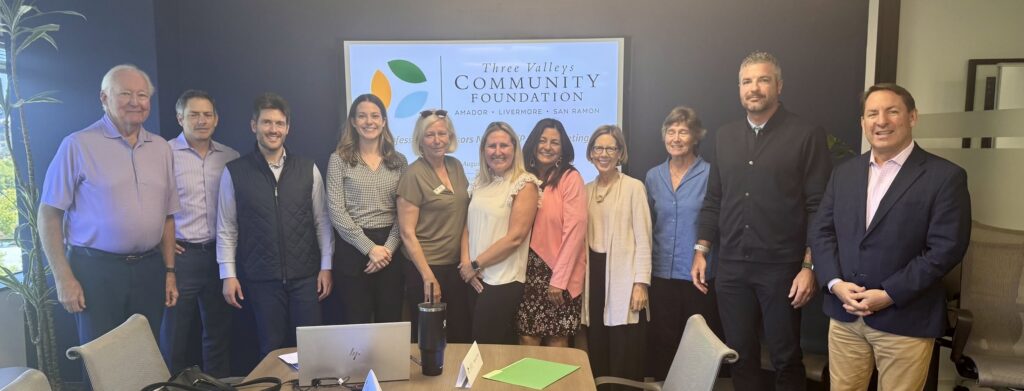
We’re looking forward to seeing you at our final in-person PAN meeting of the year on Monday, October 19, from 12-1:30 PM at Summit Financial Group. Thank you to our venue host, Summit Financial Group, LLC, and to our lunch host, Domenico’s Delicatessen.

Sponsor Shout-Out!
Thank you to our past venue and lunch sponsors.




We’re excited to introduce our Professional Advisors Newsletter! You can expect to find each newsletter on our Professional Advisors Network webpage and at the top of your inbox at the beginning of each month.
As we head into the final months of 2026, we know you’re gearing up to implement clients’ year-end strategies, including charitable giving. Read on for a year-end client checklist, an IRA giving discussion, and a case study on sneaky IRS requirements.

Year-End Checklist: Repeat, Repeat, Repeat
It’s October! You are well aware of the calendar, of course, and so are your clients. You’ve also likely already begun reminding clients about year-end tax deadlines and important loose ends to tie up before 2027 hits. Remember, though, that memories are short, and just because you’ve already mentioned year-end deadlines doesn’t mean you should stop reminding your clients. Clients appreciate knowing that you are on top of their estate planning, tax planning, and financial planning priorities.
When it comes to charitable giving reminders, Three Valleys Community Foundation is here to help! Reminders are especially important this year because new charitable deduction rules took effect in 2026 and markets may have created opportunities for clients to give appreciated assets—not to mention the usual changes in families, businesses, and finances that are inevitable every year.
Here is a checklist of five important items to include in your client conversations as you help clients prepare for December 31 deadlines:
- Client 70½ or older? Ask about QCDs. Always.
For clients age 70½ and older, a Qualified Charitable Distribution from an IRA can be an excellent way to support favorite charities. For 2026, the QCD limit is $111,000 per taxpayer. Remember, under current law, QCDs cannot be made to donor-advised funds (although pending legislation could change that), but other types of funds at 3VCF may qualify.
- Much ado about bunching.
As you work with clients who regularly support favorite charities, it’s crucial to revisit a technique called “bunching.” The higher standard deduction means many clients will not itemize every year, and the new 0.5%-of-AGI floor on itemized charitable contribution deductions adds another consideration in 2026. A client who normally gives similar amounts each year might benefit from concentrating several years of charitable contributions into a single tax year and taking the standard deduction in intervening years. A donor-advised fund at 3VCF can be especially useful here because the client can make the larger contribution now and recommend grants to favorite charities over time.
- Cash is not king!
Before a client writes a check to their fund at 3VCF or to other charities, encourage them to stop and think and check with you first! Advisors are often looking for highly appreciated stock within clients’ portfolios. Publicly traded securities held for more than one year are often particularly attractive assets to give to charity because donating the shares directly can generally allow the client to avoid recognizing the unrealized capital gains while qualifying for a charitable deduction based on fair market value, subject to applicable limitations. 3VCF can accept the stock and sell it so that the proceeds can be put to use in the client’s donor-advised or other type of fund.
Before a client writes a check to their fund at 3VCF or to other charities, encourage them to stop and think and check with you first! Advisors are often looking for highly appreciated stock within clients’ portfolios. Publicly traded securities held for more than one year are often particularly attractive assets to give to charity because donating the shares directly can generally allow the client to avoid recognizing the unrealized capital gains while qualifying for a charitable deduction based on fair market value, subject to applicable limitations. 3VCF can accept the stock and sell it so that the proceeds can be put to use in the client’s donor-advised or other type of fund.
- Non-itemizers, raise your hands!
Don’t overlook the new deduction for your clients who do not itemize their deductions. Beginning with the 2026 tax year, a client who takes the standard deduction can still deduct up to $1,000 in qualifying cash charitable contributions, or $2,000 for married couples filing jointly, subject to limitations (e.g., only cash gifts count, and gifts to donor-advised funds are excluded). For clients who assumed there was “no tax benefit” to their charitable gifts because they don’t itemize, this is worth mentioning!
- Think long-term.
Certainly, during the last quarter of every year your focus is likely on helping clients meet the December 31 deadline for various tax planning and charitable giving strategies. But don’t stop there! This is also a great time to do a quick check-in on your clients’ long-term charitable plans. Has the client already provided for a charity, or a fund at 3VCF, in a will or trust? Have IRA beneficiary designations been reviewed recently to determine whether a charitable gift makes sense as part of the account’s ultimate disposition? Your clients are in a “get it done” mode anyway, so now is a good opportunity to make sure their charitable intentions are accurately reflected in an estate plan.
As you address year-end planning priorities with your clients, please reach out to us! We are honored to serve as your clients’ home for charitable giving—and grateful to be your first call when matters of philanthropy arise in your work.

Apples and Oranges: Lifetime and Legacy Giving with IRAs
Retirement assets are becoming an increasingly important part of charitable planning. Americans hold more than $50 trillion in retirement accounts—nearly $20 trillion of which are held in IRAs. Meanwhile, the Great Wealth Transfer is underway, with more than $120 trillion expected to change hands over the coming decades.
In light of these trends, it is especially important for estate planning attorneys, CPAs, and financial advisors to remind clients that IRAs in particular offer two distinct charitable planning opportunities. Why? Because:
- Clients may blur the two opportunities together
- Clients may know about one opportunity but not the other
- Clients may simply not realize that IRAs and other retirement assets can play a role in their charitable plans at all
So what are these opportunities, in plain language that you can use with your clients? Here’s a primer:
Lifetime giving opportunities for clients age 70½ and older
QCDs can become particularly relevant for a client when required minimum distributions begin, currently at age 73. A QCD can count toward a client’s RMD while still excluding the distributed amount from taxable income, assuming applicable requirements are met. But there is no need to wait until RMD age to begin the conversation.
Legacy giving opportunity for clients of all ages
You know quite well that a client can name a charity (including a donor-advised fund at 3VCF) as the beneficiary of an IRA or other type of eligible retirement plan, allowing some or all of the assets remaining in the account at death to pass to charity. The designation itself is relatively simple, and it can be incorporated into a client’s overall estate and charitable planning without necessarily changing the client’s current lifetime giving.
This technique is especially useful because retirement plan assets passing to a charitable beneficiary typically are not subject to the income tax that generally applies when heirs receive taxable distributions from inherited traditional IRAs and retirement plans.
So what’s the issue?
Clients sometimes do not realize that these opportunities are independent of one another. One client might use QCDs to support favorite charities throughout retirement and also name a charity as the beneficiary of some or all of a retirement account. Another client may have little interest in lifetime IRA giving but find the beneficiary designation compelling as part of a legacy plan.
That’s why this should not be a one-and-done conversation. Retirement balances change. Charitable interests evolve. Clients reach new ages and life stages. Estate plans get updated. And a client who wasn’t ready to consider one of these strategies the last time you discussed charitable giving may be ready now.
As retirement assets continue to grow and the Great Wealth Transfer accelerates, consider making two questions a regular part of conversations with charitably inclined clients:
- If you’re 70½ or older, could your IRA help support the causes you care about during your lifetime?
- Could your retirement assets play a role in the legacy you ultimately leave behind?
Keep your eyes on pending legislation that might expand the ways your clients can use QCDs. Congress is considering two bipartisan charitable giving proposals: the Charity Parity Act, which would permit QCDs directly from employer-sponsored retirement plans, such as 401(k)s, in addition to traditional IRAs, and the IRA Charitable Rollover Facilitation and Enhancement Act, which would extend QCD eligibility to donor-advised funds. Neither proposal has advanced beyond committee, but both remain pending and of course could be very useful to expand charitable giving options if enacted.
Please reach out to 3VCF anytime you encounter the topic of QCDs, retirement plan legacy gifts to charity, or any other issue involving charitable giving. We are here for you!

This missing sentence can cost your clients a lot of money!
If you advise charitable clients in your practice, you are no stranger to the IRS’s requirements for substantiating charitable deductions.
In some cases, however, tax advisors and their clients are so focused on valuing the gift and filing the Form 8283 that they overlook the requirement for a “contemporaneous written acknowledgment.” And this can derail the deduction! It sure was for the taxpayers in Wells v. Commissioner, T.C. Memo. 2026-49, involving a claimed charitable deduction carryover stemming from a gift of Mississippi real estate to a nonprofit organization.
The property had been appraised at $4.42 million. And there was plenty of documentation surrounding the gift. The taxpayers had an appraisal. The property was transferred by deed. The charity’s president sent a letter thanking the donors and referencing the property’s appraised value. The taxpayers also filed a Form 8283.
So what went wrong?
The charity’s acknowledgment letter did not state whether the organization had provided any goods or services in exchange for the contribution. You know the rule:
A donor claiming a deduction of $250 or more is also required to obtain and keep a contemporaneous written acknowledgment for a charitable contribution. To be contemporaneous, the written acknowledgment must generally be obtained by the donor no later than the date the donor files the return for the year the contribution is made. The written acknowledgment must state whether the donee provides any goods or services in consideration for the contribution.
Specifically, Internal Revenue Code Section 170(f)(8)(C) requires the donor to obtain the acknowledgment by the earlier of (1) the date the donor actually files the tax return for the year of the gift or (2) the return’s due date, including extensions.
In the Wells case, the contemporaneous written acknowledgment was missing a critical required statement. Although the taxpayers argued that their various documents, considered together, were enough to substantiate the contribution, the Tax Court disagreed. The statutory acknowledgment requirement had not been satisfied, and the charitable deduction carryovers were disallowed.
For advisors, Wells is a valuable reminder that the mechanics of charitable giving deserve just as much attention as the strategy. This is especially important when clients are giving real estate, closely held business interests, or other noncash assets where the deductions can be substantial and additional substantiation requirements may apply.
When you’re helping a client make a significant charitable gift, don’t assume that a deed, appraisal, Form 8283, or friendly thank-you letter necessarily checks every box. Make sure the client is paying close attention to the specific documentation requirements—and involve the charitable organization early enough to correct any problems before the applicable deadline.
The defect in Wells was fixable, but only if someone had caught it in time. Again, Internal Revenue Code Section 170(f)(8)(C) says that the donor must obtain a compliant acknowledgment by the earlier of (1) the date the donor actually files the tax return for the year of the gift or (2) the return’s due date, including extensions.
So imagine that Wells’s tax advisors had reviewed the charitable-gift file while preparing the 2016 return and noticed that the nonprofit’s letter didn’t say whether goods or services had been provided in exchange for the property. The solution to this particular problem may have been straightforward: contact the nonprofit and obtain a corrected or supplemental written acknowledgment containing the missing statement before filing the return.
3VCF is happy to let you know about tax rulings and updates that offer insight into charitable planning techniques. We are also happy to serve as a sounding board as you work with clients on charitable giving strategies, including gifts of complex assets into a client’s donor-advised or other type of fund.
Lorem ipsum dolor sit amet, consectetur adipiscing elit. Ut elit tellus, luctus nec ullamcorper mattis, pulvinar dapibus leo.
PAN Member Spotlight:
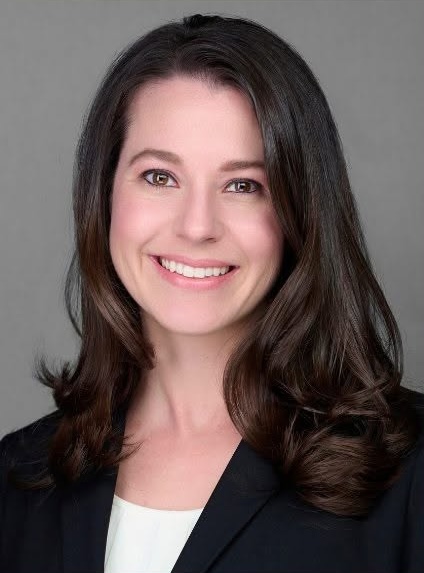
Kim Damiani, CFP®, CEPA®
Financial Advisor, Summit Financial Group, LLC
3VCF Board Member
3VCF Investment Committee Chair
3VCF PAN Chair
Kim Damiani brings a wealth of leadership and financial expertise to her roles in various prominent organizations. Having served as both Board Chair and Treasurer for the Pleasanton Chamber of Commerce, she played a pivotal role in fostering community growth and economic development. As a founding board member of the Pleasanton Young Professionals, Kim demonstrated her commitment to empowering the next generation of leaders.
Currently, Kim continues her impactful contributions as a board member for both Three Valleys Community Foundaiton and the Summit Financial Foundation. A graduate of Cal Poly San Luis Obispo, Kim joined Summit Financial Group in 2018 as a CERTIFIED FINANCIAL PLANNER™, leveraging over a decade of experience in the financial services sector. In recognition of her commitment to excellence, Kim was named in the 2026 Forbes Best-in-State Next-Gen Wealth Advisors list. This distinction reflects her experience helping families, individuals, and organizations of significant wealth navigate complex financial needs through thoughtful guidance and comprehensive resources.
As a Bay Area native, Kim is deeply rooted in her commitment to giving back to the local community, and she finds fulfillment in educating teens through financial literacy workshops.
Securities offered through Raymond James Financial Services, Inc., member FINRA /SIPC. Investment advisory services offered through Raymond James Financial Services Advisors, Inc. Summit Financial Group, LLC is not a registered broker/dealer and is independent of Raymond James Financial Services. 2000 Crow Canyon Place, Suite 450, San Ramon, CA 94583. Certified Financial Planner Board of Standards Inc. owns the certification marks CFP®, CERTIFIED FINANCIAL PLANNER™, CFP® and CFP® in the U.S., which it awards to individuals who successfully complete CFP Board’s initial and ongoing certification requirements. Raymond James is not affiliated with 3VCF.
Closing thoughts…
We hope you found our first PAN newsletter informative and useful—we’re excited to see where this new addition to our program takes us! Thank you for allowing Three Valleys Community Foundation to be a resource. We’re honored to be your first call whenever the topic of charitable giving arises.
Warm Regards,
Kelly Bowers, Ed.D.
CEO / President
Three Valleys Community Foundation
(925) 337-3672
kbowers@3vcf.org
The 3VCF team is honored to serve as a resource and sounding board as you build your charitable plans and pursue your philanthropic objectives for making a difference in our community. This newsletter is provided for informational purposes only. It is not intended as legal, accounting, or financial planning advice. Please consult your tax or legal advisor to learn how this information might apply to your own situation.